There is no universally correct answer — but there is a right answer for your business. This guide breaks down the trade-offs the way we walk our own clients through them.
What "ready-made" really costs
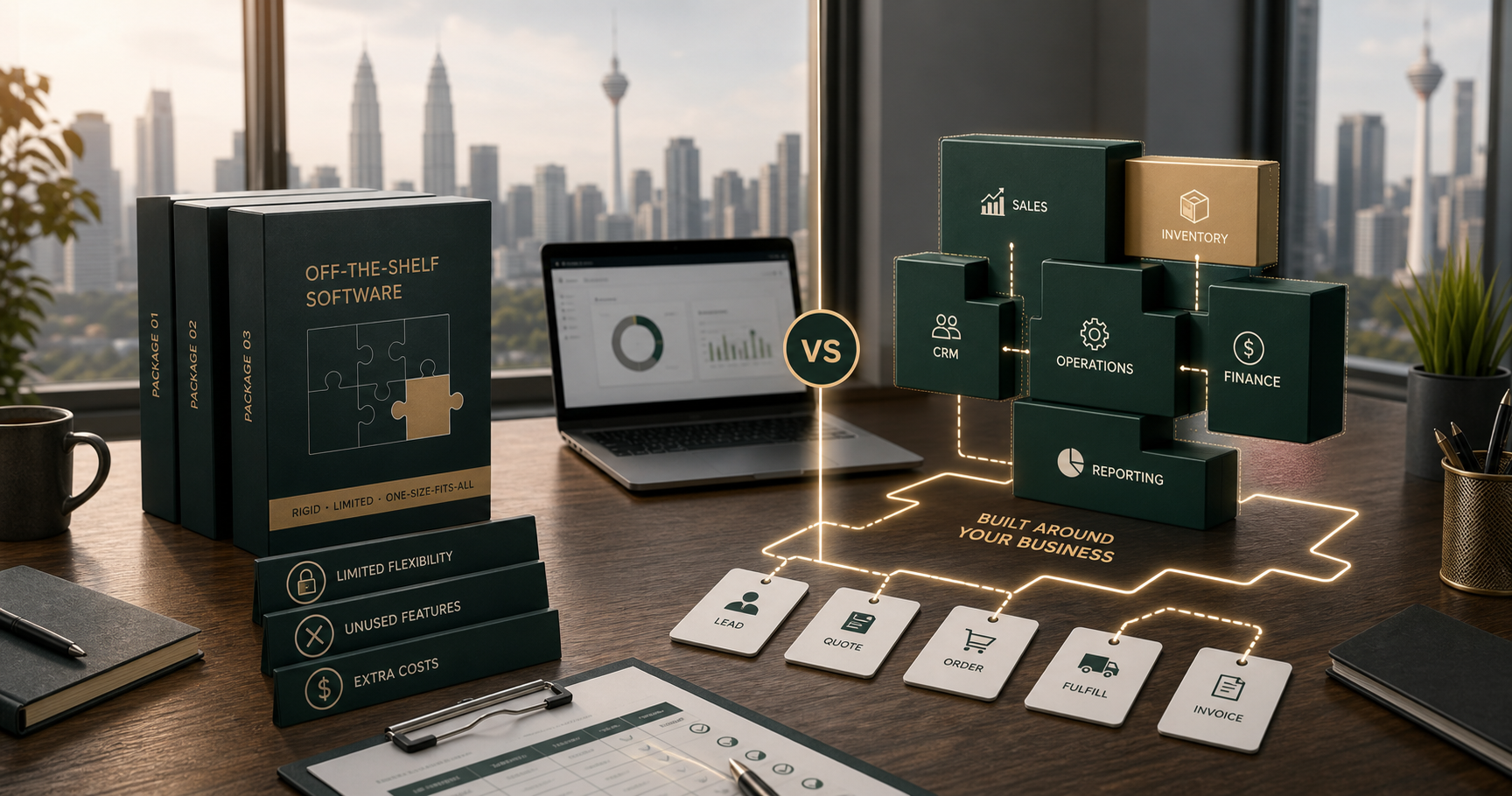
Off-the-shelf software looks attractive on day one. Lower upfront cost, near-instant setup, and a polished demo that promises everything. For very standard needs — basic accounting, simple email, generic scheduling — it is often the correct choice, and we will tell you so.
The hidden cost appears later. Ready-made systems are built for the average of thousands of businesses, which means they are built for no business in particular. To use them, you bend your processes to fit the software's assumptions. Your team invents spreadsheets and manual workarounds to cover the gaps. You pay per-seat licences that climb as you grow, and your data sits on a vendor's server under a vendor's terms.
For a business with genuinely unique workflows or serious growth ambitions, that "cost-saving" move quietly turns into an operational tax you pay every single day.
What a customised system gives you
A customised system inverts the relationship: the software adapts to your business, not the other way around. Instead of forcing your team into someone else's logic, the system mirrors your existing flow — then removes the friction inside it.
The advantages compound over time:
- Fit to your exact processes. Every screen, field and rule reflects how your team actually operates, so adoption is faster and errors drop.
- Scalability on your terms. Add users, modules or entire new workflows as you grow, without renegotiating a licence tier.
- Clean integration. A custom build slots into your existing ERP, CRM, accounting or e-commerce tools instead of fighting them.
- Full ownership of features and data. You decide what the system does and where the data lives.
- A long-term foundation. Rather than a tool you outgrow, you get an asset that grows with you.
The honest comparison
The Malaysia and Singapore context
The calculus is slightly different across the causeway. Malaysian SMEs can often offset customised software investment through incentives such as the Automation Capital Allowance (ACA), which improves the after-tax economics of a custom build considerably. Singaporean businesses operate in a higher-cost labour market where automation pays back faster, and where data-residency and PDPA/PDPC expectations make owning your own system a compliance advantage, not just a technical one.
In both markets, the pattern we see repeatedly is the same: companies buy ready-made to save money early, hit a ceiling within 18 months, and then pay twice — once to escape the old system and again to build the right one.
How to decide
Ask three questions honestly:
-
1Is your process genuinely standard, or is it a source of competitive advantage? If your way of working is the business, don't hand it to generic software.
-
2Where will you be in three years? If you expect to double headcount, add outlets, or enter a new market, design for that now.
-
3Who should own your data? If the answer is "us," a custom system is the only path that guarantees it.
Where Trendtive Digital fits in
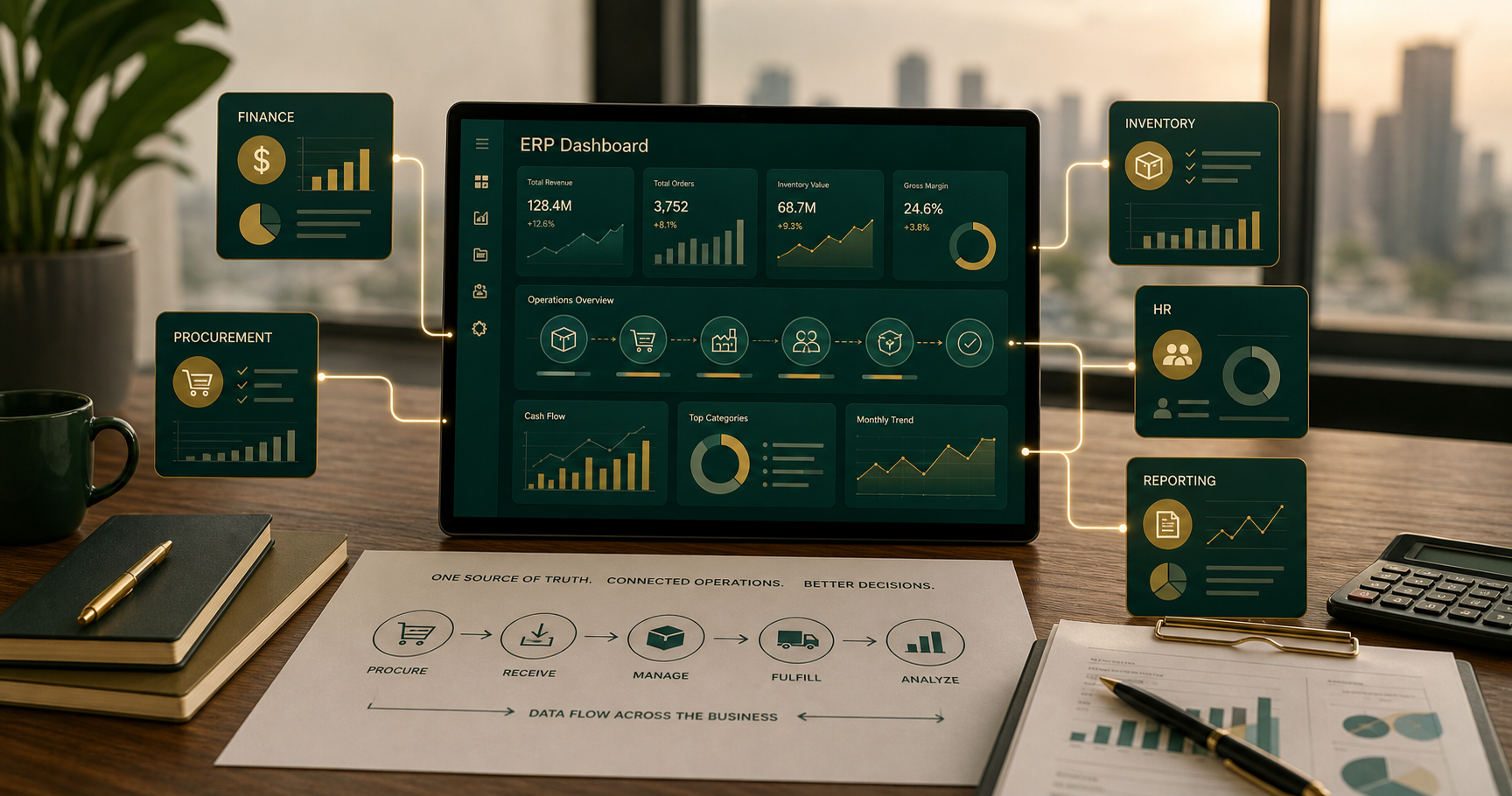
At Trendtive Digital, we build customised systems for Malaysian and Singaporean businesses that have outgrown off-the-shelf tools — from offline-first point-of-sale and inventory platforms to ERP-style operational dashboards and automation workflows. We start by understanding how your business actually runs, then design a solution that fits it precisely and scales with you.
If you are weighing ready-made against custom and want a clear-eyed answer rather than a sales pitch, that is exactly what our discovery process is built to deliver.